"The warden said to me" is about the hierarchy of black and white in society, and the rifts that it causes. The speaker is an African American named Etheridge that is imprisoned. Etheridge is recalling a conversation that he had with the white warden. It appears that the warden's question is asked innocently out of curiosity with no malintentions, but the response from Etherdige is conditioned by poor treatment that African Americans have received since slavery. It is important that the speaker is African American because the message would likely be different if it came from a white person. In the situtation presented, if the speaker had been white, there may have been a condescending answer or one said with an unawareness of reality. The fact that this poem is presented as a conversation is also important because it shows that the warden and prisoner are on close levels; no one is being condescending or difficult.
The ideas of this poem that are conveyed through the speaker, tone, and presentation, are further enhanced by literary devices. Knight uses paranthetical thought to present the ideas that the speaker is having, but does not verbally present; for example, "(innocently, I think)," (2). Etheridge does not think the warden's question is asked with a malicious intent, but he is hesistant because of actions and ideas presented by society. Diction is also very critical in this poem. Knight presents the warden to be on a similar intellectual level as the the prisoner; for example, "'Say, etheridge,/ why come the black boys don't run off/ like the white boys do?,'" (2-4). The warden does not use proper English, just as the prisoner, Etheridge, does not; for example, "'Well, suh/I ain't for sure,"' (6-7). It is also important that the name Etheridge is not capitalized, just as suh is not capitalized. This shows that there is a minimal level of respect between the warden and prisoner. Etheridge is respectful enough to refer to the warden as suh because of what he was taught as a black boy growing up, but he does not respect the warden. The warden is not trying to be condescending or nasty to Etheridge, but the fact that he refers to the grown prisoners as boys is disrespectful.
"The Warden said to me" was interesting to me because it represents a miscommunication between races. I do not believe that either of these characters are truly racist towards one another, but because of what they are taught from a young age, they have racist tendencies. This example, which could be found in many other writings and texts, is a reflection of how family and society can influence a person's beliefs. The warden and Etheridge do not have any reason to dislike each other except for their positions in life, neither has done anything to the other. I feel that this situtation is not only found between black and white during the time period that the poem was published, but it can be found today in many forms, such as clicks. It is as if, we learn from mistakes, but can not completely rid ourselves of them because they are somehow ingrained in our nature.
Saturday, March 29, 2008

217 The Lipstick on the Mirror ~Tom Disch
"The Lipstick on the Mirror" is making a negative statement on Hollywood and advertising that have created empires off of convincing women that they should look a certain way. The speaker of the poem is an omniscient narrator that has been watching the "wicked queen", who symbolizes industry and advertising, influencing the "common" people. The tone of the speaker is very negative and disappointed, it is also condescending in the way that the speaker points out the negative actions of the queen. The speaker and their tone is effective in this poem because they are like the reader of a fairytale. The "wicked queen" is an allusion to the wicked queen in Snow White and the Seven Dwarfs, which is a commonly known fairytale with a moral at the end. From the beginning of the fairytale, one can tell that the wicked queen is going to be the antagonist, so when the wicked queen is used as the main subject of the poem, the reader can sense from the beginning that industry and advertising, symbolized by the wicked queen, is going to be looked upon in a negative light. The punctuation creates a rhythm because many details are placed in lists; for example, "Hosiery and bras, as consumers, enchanted," (19). The listing nature of the details of the poem allow for more and more detail to be added; the rhythm makes it seem as though the speaker could find numerous details to support their case with little effort. It is also effective how Disch uses adjectives almost as if they are nouns; for example, "Would lap it up, gazing in their lesser/ Mirrors to see themselves in royal attire," (7-8). Lesser could mean that the women are looking at what they consider to be their lesser beauty, but lesser really goes with the word mirrors.
Disch uses personification, among other literary techniques, often such as when he writes, "Whose compact mirrors would whisper," (12). He makes it seem as if looking in the mirror is what causes the problem, but insecurities force the people to hear what the mirror whispers. Another technique used is repetition of the word her. This is important because it shows how the women in this poem are looking at someone else's features instead of looking for good in themselves. The inclusion of a list of different ethnicities affected by the queen is an important touch because it shows how the evil of the queen has spread far beyond her realm, just as ideas of marketing and Hollywood have traveled far beyond the United States. Probably the most important line of the poem is the last when the mirror replies to the queen's question, "Though, Majesty, thou," (35). This line is important because is shows that the industries do not necessarily see anything wrong with the dramatic effect they have on society.
This poem is completely relevant to our lives because Hollywood continues to take over our lives. The number of tabloids and gossip shows increase exponentially every year, and with that more stories about stars with issues come out. For example, how many days out of the year has Britney Spears been on the news? Answer: too many to count. Advertising and industry has created standards for all people, not just women, as referenced in the poem, that cause more and more people to resort to extreme behavior in order to fit in. Examples: fad diets, plastic surgery, and miracle drugs. "The Lipstick on the Mirror" was very interesting because it shows that media, society's mirror, has been a disease affecting society for a long period of time, and the disease apparently has no cure because it is even worse now.
Disch uses personification, among other literary techniques, often such as when he writes, "Whose compact mirrors would whisper," (12). He makes it seem as if looking in the mirror is what causes the problem, but insecurities force the people to hear what the mirror whispers. Another technique used is repetition of the word her. This is important because it shows how the women in this poem are looking at someone else's features instead of looking for good in themselves. The inclusion of a list of different ethnicities affected by the queen is an important touch because it shows how the evil of the queen has spread far beyond her realm, just as ideas of marketing and Hollywood have traveled far beyond the United States. Probably the most important line of the poem is the last when the mirror replies to the queen's question, "Though, Majesty, thou," (35). This line is important because is shows that the industries do not necessarily see anything wrong with the dramatic effect they have on society.
This poem is completely relevant to our lives because Hollywood continues to take over our lives. The number of tabloids and gossip shows increase exponentially every year, and with that more stories about stars with issues come out. For example, how many days out of the year has Britney Spears been on the news? Answer: too many to count. Advertising and industry has created standards for all people, not just women, as referenced in the poem, that cause more and more people to resort to extreme behavior in order to fit in. Examples: fad diets, plastic surgery, and miracle drugs. "The Lipstick on the Mirror" was very interesting because it shows that media, society's mirror, has been a disease affecting society for a long period of time, and the disease apparently has no cure because it is even worse now.
212 "Money" ~ Victor Contoski

The theme of "Money" is that although it may seem that money can make a person happy and buy them whatever they please, it will become an unhealthy obsession that will cause problems; the money will control the person instead of the person controlling the money. The speaker of the poem is an omniscient narrator, which adds to the effectiveness of the poem because the speaker knows everything. Personally, the speaker has a feel of a grandparent trying to give you advice because they have been down that particular path and want someone to benefit from their experiences. There is a shift in the poem between the second and third stanzas. The speaker changes from telling the reader how money can be tamed and bring happiness to a more pessimistic tone, telling the reader that money will take control of you easily. This shift is effective because the poem acknowledges common beliefs that money can fix problems and buy something that will make a person happy, and then the poem acknowledges the other side of the situation. It is like giving a piece of bad news and telling the good news first to lessen the blow, but the bad news is not any easier to receive because good thoughts and hopes were just crushed from a higher level than they would have been at if someone had just given the bad news.
Contoski personifies money when he writes, "It will nest/ in your pocket/ or curl up in a corner/reciting softly to itself/ the names of the presidents," (3-7). From these lines, money is made out to be like a pet that provides pleasure to its owner. The lines are comforting when the money recites the names of the presidents to itself, like someone counting sheep to fall asleep. These lines are representative of a person becoming too comfortable with pleasure that money may be bringing them. The speaker goes on to tell the reader that money may be impressive to friends and find you love, but not true love or friendship because, as Contoski writes, "But like an amoeba/ it makes love/ in secret/ only to itself," (12-15). Contoski alludes to a microorganism that reproduces asexually to reference that money loves money; someone that becomes your friend or falls in love with you that would not have if you did not have money, is only in it for the money. The point where a person becomes obsessed with material possession and money is shown when the speaker states, "Fold it frequently/it needs exercise," (16-17). This is an allusion to someone counting or looking at their money. However, the last two stanzas are most telling of the theme of the poem, Contoski writes, "Then one day when you think/ you are its master it will turn its head/ as if for a kiss/and bite you gently on the hand./ There will be no pain/but in thirty seconds/ the poison will reach your heart," (21-29). Someone may think that they are in control of everything, but their obsession will quickly affect them, and before they no there is a problem, it may be too late; hence the poison reaching the heart with no pain felt.
Through this poem, Contoski is making a statement that money, although it may buy you nice things, those material possessions are not what is most important; in fact the happiness those items bring may be false.
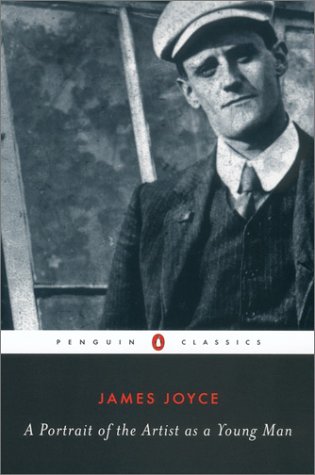
A Portrait of the Artist as a Young Man
Flight Motif
From the opening pages of A Portrait of the Artist as a Young Man when the reader is introduced to the main character Stephen Dedalus, the flight motif is introduced, and will be carried on throughout the novel. Stephen’s last name comes from the Dedalus Myth in Greek mythology. Dedalus is thrown in prison because King Minos is convinced he has helped the Athenians escape, so Dedalus builds a pair of wings out of feathers and wax in order to escape. Stephen is imprisoned by his guilt and by others who try to make him conform to what they want. For example, Stephen’s father told him to make friends with the right people, like he did, but Mr. Dedalus was not always the upstanding citizen that he appears to be. Stephen is imprisoned by his homeland because it is not accepting of his plans for his future, just as Dedalus sees no escape by land, only flight.
As Stephen’s life continues, there are numerous instances where he is compared to a bird or birds are strategically included in a description; for example, “His throat ached with desire to cry aloud, the cry of a hawk or eagle on high, to cry piercingly of his deliverance to the winds,” (183-184). Flight is a symbol of Stephen finding his soul and freeing himself from the influence of others and Ireland. After Stephen realizes that his passion lies in writing, the flight motif becomes even more evident because at this point, Stephen’s relationship with his family is at its weakest, and he is realizing that the politics in Ireland are very constraining. Stephen is not living in the Ireland that he recalls from his childhood; people have to act like sheep such as the students taking notes in one of Stephen’s classes, leaving little space for thought and creativity.
Stephen needs space to contemplate his thoughts, like the birds have freedom to fly throughout the skies. His mind and soul needs to escape the heavily fortified prison cell created by guilt and constraints; symbolized by the birds and flight into the vastness of the sky, where there would seemingly be room for everything.
Quote
“Last and crowning torture of all the tortures of that awful place is the eternity of hell. Eternity! O, dread and dire word. Eternity! What mind of man can understand it? ... You have often seen the sand on the seashore. How fine are its tiny grains! And how many of those tiny little grains go to make up the small handful which a child grasps in its play. Now imagine a mountain of that sand, a million miles high, reaching from the Earth to the farthest heavens, and a million miles broad…And if that mountain rose again after it had been all carried away and if the bird came again and carried it all away again grain by grain: and if it so rose and sank as many times as there are stars in the sky, atoms in the air, drops of water in the sea, leaves on the trees, feathers upon birds, scales upon fish, hairs upon animals, at the end of all those innumerable risings and sinkings of that immeasurably vast mountain not one single instant of eternity could be said to have ended,” (142-143).
This passage is an example of Joyce’s ability to create descriptions. He takes the word eternity, which already creates thoughts of something never ending, and creates images upon images of something never-ending, something completely unfathomable. This technique is called hyperbole, exaggeration to illustrate a point. Joyce also uses repetition of the concept of immeasurable things; the atoms and drops of water are all things that are seemingly immeasurable. The exclamation marks emphasizing the emotion being put into this speech really create a sense of emotion; one can sense the dramatic feel of this speech. The rhetorical question also does a good job of setting up the reader for the description to follow because it causes the reader to question the understanding that they have of eternity, making them more vulnerable to the explanations to come.
Opinion
From the opening pages of A Portrait of the Artist as a Young Man when the reader is introduced to the main character Stephen Dedalus, the flight motif is introduced, and will be carried on throughout the novel. Stephen’s last name comes from the Dedalus Myth in Greek mythology. Dedalus is thrown in prison because King Minos is convinced he has helped the Athenians escape, so Dedalus builds a pair of wings out of feathers and wax in order to escape. Stephen is imprisoned by his guilt and by others who try to make him conform to what they want. For example, Stephen’s father told him to make friends with the right people, like he did, but Mr. Dedalus was not always the upstanding citizen that he appears to be. Stephen is imprisoned by his homeland because it is not accepting of his plans for his future, just as Dedalus sees no escape by land, only flight.
As Stephen’s life continues, there are numerous instances where he is compared to a bird or birds are strategically included in a description; for example, “His throat ached with desire to cry aloud, the cry of a hawk or eagle on high, to cry piercingly of his deliverance to the winds,” (183-184). Flight is a symbol of Stephen finding his soul and freeing himself from the influence of others and Ireland. After Stephen realizes that his passion lies in writing, the flight motif becomes even more evident because at this point, Stephen’s relationship with his family is at its weakest, and he is realizing that the politics in Ireland are very constraining. Stephen is not living in the Ireland that he recalls from his childhood; people have to act like sheep such as the students taking notes in one of Stephen’s classes, leaving little space for thought and creativity.
Stephen needs space to contemplate his thoughts, like the birds have freedom to fly throughout the skies. His mind and soul needs to escape the heavily fortified prison cell created by guilt and constraints; symbolized by the birds and flight into the vastness of the sky, where there would seemingly be room for everything.
Quote
“Last and crowning torture of all the tortures of that awful place is the eternity of hell. Eternity! O, dread and dire word. Eternity! What mind of man can understand it? ... You have often seen the sand on the seashore. How fine are its tiny grains! And how many of those tiny little grains go to make up the small handful which a child grasps in its play. Now imagine a mountain of that sand, a million miles high, reaching from the Earth to the farthest heavens, and a million miles broad…And if that mountain rose again after it had been all carried away and if the bird came again and carried it all away again grain by grain: and if it so rose and sank as many times as there are stars in the sky, atoms in the air, drops of water in the sea, leaves on the trees, feathers upon birds, scales upon fish, hairs upon animals, at the end of all those innumerable risings and sinkings of that immeasurably vast mountain not one single instant of eternity could be said to have ended,” (142-143).
This passage is an example of Joyce’s ability to create descriptions. He takes the word eternity, which already creates thoughts of something never ending, and creates images upon images of something never-ending, something completely unfathomable. This technique is called hyperbole, exaggeration to illustrate a point. Joyce also uses repetition of the concept of immeasurable things; the atoms and drops of water are all things that are seemingly immeasurable. The exclamation marks emphasizing the emotion being put into this speech really create a sense of emotion; one can sense the dramatic feel of this speech. The rhetorical question also does a good job of setting up the reader for the description to follow because it causes the reader to question the understanding that they have of eternity, making them more vulnerable to the explanations to come.
Opinion
A Portrait of the Artist as a Young Man was very enjoyable because of Joyce’s writing style and the difficulty of reading it. Admittedly, through the first part of the novel, I did not enjoy reading it because I felt it was boring, lacking any true plot that creates captures you as a reader. As the novel progresses, and the writing becomes more detailed and sophisticated, the novel became exponentially more enjoyable mainly because Joyce’s ability to create a picture and trigger all the senses through his descriptions was captivating such as in the descriptions of Hell. A Portrait of the Artist as a Young Man was a challenging novel because of Joyce’s ability as a writer; there were several instances where a passage could be read and all of the important details would not be noticed the first time, but that is not bad thing. I would rather be challenged by what I am reading versus bored because the material is too easy.
Thursday, January 17, 2008
Heart of Darkness

fYffffffffYffffffffYfffffffffYfffffffffffYf
The Difference Between Mr. Kurtz and Marlow
Mr. Kurtz is intended to be the picture of everything that is evil and twisted deep in the human soul that can be unleashed with the proper stimulus or lack of restraint, while Marlow is the soul who is saved by stepping back before it is too late. Obviously cutting off people’s heads and placing them on stakes is not what would be considered normal, or right by any means, but neither is destroying a culture.
Kurtz finds a part of himself that is quite disturbing and embraces it, but the fact that he was stimulated by the ideas and greed of colonialism can not be denied. The expedition creates scars in the jungle, belittles the native people because their culture is different, and is responsible for the death of many more than Kurtz has killed. For instance, the story of the ghost in the boiler that is used to take advantage of the native’s beliefs so that he will work for them, or perhaps it was just for the entertainment of the expedition. Then there is the dead body of the road that is considered a good thing.
Marlow may think that he is making the right decision by recognizing how out of control Kurtz is, but what he does not realize is colonialism is a huge part of why Kurtz is the way he is, and that he just chose colonialism. Both Kurtz and Marlow are wrong in their decisions, but the difference between the two is that Kurtz recognizes what he is doing, and Marlow does not. Kurtz’s last words, “The horror, the horror,” make it evident that he is disgusted with himself and what he has done, Marlow does not realize what a mistake he is making by being involved with the expedition and accepting colonialism.
Quote-
"They were common everyday words- the farmiliar, vague sounds exchanged on every waking day of life. But what of that? They had behind them, to my mind, the terrific suggestiveness of words heard in dreams, of phrases spoken in nightmares. Soul! If anyone has ever struggled with a soul, I am the man. And I wasn't arguing with a lunatic either," (Conrad 149).
Mr. Kurtz is intended to be the picture of everything that is evil and twisted deep in the human soul that can be unleashed with the proper stimulus or lack of restraint, while Marlow is the soul who is saved by stepping back before it is too late. Obviously cutting off people’s heads and placing them on stakes is not what would be considered normal, or right by any means, but neither is destroying a culture.
Kurtz finds a part of himself that is quite disturbing and embraces it, but the fact that he was stimulated by the ideas and greed of colonialism can not be denied. The expedition creates scars in the jungle, belittles the native people because their culture is different, and is responsible for the death of many more than Kurtz has killed. For instance, the story of the ghost in the boiler that is used to take advantage of the native’s beliefs so that he will work for them, or perhaps it was just for the entertainment of the expedition. Then there is the dead body of the road that is considered a good thing.
Marlow may think that he is making the right decision by recognizing how out of control Kurtz is, but what he does not realize is colonialism is a huge part of why Kurtz is the way he is, and that he just chose colonialism. Both Kurtz and Marlow are wrong in their decisions, but the difference between the two is that Kurtz recognizes what he is doing, and Marlow does not. Kurtz’s last words, “The horror, the horror,” make it evident that he is disgusted with himself and what he has done, Marlow does not realize what a mistake he is making by being involved with the expedition and accepting colonialism.
Quote-
"They were common everyday words- the farmiliar, vague sounds exchanged on every waking day of life. But what of that? They had behind them, to my mind, the terrific suggestiveness of words heard in dreams, of phrases spoken in nightmares. Soul! If anyone has ever struggled with a soul, I am the man. And I wasn't arguing with a lunatic either," (Conrad 149).
In this quote, Marlow is speaking about Kurtz and what has driven him to his current state. This gives a clear indication that Kurtz is intended to be Marlow's alter ego. When Marlow says, "The farmiliar, vague sounds exchanged on every waking day of life...of phrases spoken in nightmares," it suggests that Kurts is a sane human being, who understands precisely what he is doing. The fact that the words he speaks seem as though they could be straight out of a nightmare, yet they are common, shows that this evil could be something that everyone could fall victim to; despite the fact that Conrad may be suggesting that this is something that only men could experience. The proper stimulus could make any common aspect of life turn into a "nightmare" because people possess an animal instinct that becomes harnessed by societal influences and self-restraint.
I was a little confused the first time I read Heart of Darkness, but once I understood it, it was very interesting. I liked how Kurtz is intended to be Marlow’s alter ego, and it is like Marlow is looking in a mirror the entire time. Conrad makes some great descriptions, and he is very concise, and to the point
Invisible Man

Throughout Invisible Man, it is clear that a major theme is white is right, and this philosophy appear to be the major problem for the narrator as well as other minor characters, but these characters were also facing problems within their own race. Just take a look at the narrator and how Dr. Bledsoe tricked him with the letters in an attempt to set the narrator up for failure and “keep him running”. Or, if you are not convinced, the brotherhood’s use of the narrator. The brotherhood, which was suppose to unite the African Americans of Harlem used the narrator and ended up creating an enemy out of him, as well as Brother Clifton. Then there is Ras, who uses violence to try to win the freedom that he feels the African Americans deserve, but he is making an enemy of the Brotherhood which is fighting for the same goal; just in a different manner.
Ellison not only highlighted the issue of black versus white, but the issue of black versus black. This issue is not just amongst the African American race; you could probably highlight the same issue within any race, but it comes down to a bigger issue. The entire issue of problems within a race stems from problems between people. Differing opinions create tensions and arguments because both sides feel that they are right and the other is wrong. A huge part of most problems is miscommunication between strong-willed people. Not that one person needs to give up on their argument, but someone has to be the bigger person and say that there is an issue that needs to be resolved. The moral of this novel comes down to the fact that we all just need to get along. (As cheesy as its sounds). The problem is not just black and white; it’s bigger than that.
“He believes in you as he believes in the beat of his heart. He believes in that great false wisdom taught slaves and pragmatists alike, that white is right. I can tell you his destiny. He’ll do your
bidding, and for that his blindness is his chief asset. He’s your man, friend. Your man and your destiny. Now the two of you descend the stairs into chaos and get the hell out of here,” (Ellison 95).
This quote is said by the black doctor at the Golden Day after Mr. Norton becomes ill over what he has seen in the old slave quarters. Mr. Norton could be considered an idealist because he wants to help young African Americans, and feels that the world can be changed; yet at the same time he believes that white is right, despite truly wanting to create change. Typically an idealist would probably not believe in this philosophy, but Mr. Norton is so naive about his own thoughts and actions that he does not realize that he is influencing the problems in some ways. When the doctor says, “His blindness is his chief asset, he means that Mr. Norton will not see the real horrors that the black race encounters. Then when the doctor says, “He’s your man and your destiny,” he is referring to the fact that the narrator is blind to the truth himself, and that he too will eventually be shocked when he recognizes what really goes on. The last line, “Descend the stairs into chaos,” refers to the fact that even though people are attacking each, there is prostitution, and other problems inside of the Golden Day, the people recognize the truth, while there are even more problems and people that do not recognize them outside the walls of the Golden Day.
Invisible Man is definitely a well-written novel that could be read multiple times, with new aspects, symbols, etc. being found each time. However, in my opinion, it was too long. By the time the narrator had reached New York and gotten involved with the Brotherhood, the theme of the novel was evident, but there continued to be more examples of the theme. By the end of the novel, it just seemed unnecessary that there were so many examples of how the Narrator was used, made into what others and not being what he wanted. The novel probably would have been just as powerful if some of it had cut out. I was honestly bored, and no longer cared what happened by the time the novel ended.
Player Piano

A major point that Vonnegut makes in Player Piano is that people sometimes forget what happiness is. Everyone thinks that technology will make things better, easier, and there will be more time to do things that are fun. Technology definitely has its perks, I could make a list of at least a hundred things I couldn’t live without, but sometimes it just makes things boring. Technology can make things so easy that it doesn’t seem like any work was done. For instance, when I am finished typing this, I am going to press publish and I’ll be done with this assignment and have saved a tree, but it doesn’t feel like as much of an accomplishment because it is so easy to just click a few buttons.
Maybe that is a bit of an exaggeration, but look at Bud; he created a machine that does his job better than he can and he no longer has a job. He no longer has a purpose, and there are plenty of real people who are like this. For instance, the ATM has made it unnecessary to have as many bank tellers, and the copy machine has eliminated the job of the scrivener. A big part of life is having a place where one fits in and a purpose, Vonnegut demonstrates this through the examples of technology, and Paul’s struggle to choose a side of the river. Paul relies on technology for so many things that he could not make it on the other side of the river, but he does not want to be run by the machines.
Technology is obviously necessary in today’s world, but where should the line be drawn? Somehow, it needs to be determined how much technology is a good thing, and at what point everyone will literally become a heap of metal unable to do anything for themselves.
Maybe that is a bit of an exaggeration, but look at Bud; he created a machine that does his job better than he can and he no longer has a job. He no longer has a purpose, and there are plenty of real people who are like this. For instance, the ATM has made it unnecessary to have as many bank tellers, and the copy machine has eliminated the job of the scrivener. A big part of life is having a place where one fits in and a purpose, Vonnegut demonstrates this through the examples of technology, and Paul’s struggle to choose a side of the river. Paul relies on technology for so many things that he could not make it on the other side of the river, but he does not want to be run by the machines.
Technology is obviously necessary in today’s world, but where should the line be drawn? Somehow, it needs to be determined how much technology is a good thing, and at what point everyone will literally become a heap of metal unable to do anything for themselves.
This is really an entire passage, but my favorite part is this,
‘“ Well, I’ll be getting back to work. Long as this here is going to be your farm, you might’s well fix the pump. Needs a new packing.’
‘Afraid I don’t know how,’ said Paul.
‘Maybe,’ said Mr. Haycox walking away, ‘Maybe if you had gone to college another ten or twenty years, somebody would have gotten around to showing you how, Doctor,”’ (135).
I love Mr. Haycox! It takes some guts to disrespect your future landlord and boss like that. I also like how he refers to the farm as his before this conversation. I’m not trying to knock education in any way, but Mr. Haycox is right, there are some things that you just can not learn in school no matter how many years you attend. Paul is obviously very bright and works very hard to be able to earn his doctorate, but it is not going to help him fix the pump or do a lot of other things, and this society bases everything off how smart you are when it comes to tests. This entire scene is scary in a way because are society is just like this in so many ways; I mean for years everyone has been preaching to us that you need to get good grades and do well on your SAT’s, or your not going to go college, and you’ll be a failure at life. Just a little bit of an overstatement. School is important, but there are some intangibles that you will never learn there. Most importantly, just because you don’t become a doctor, you are not an idiot, and the world as you know it will not come crumbling down.
When I first started reading Player Piano, I didn’t like it because it was another utopia/ dystopia novel. It just seems that the majority of the novels with that theme are so similar that you could interchange the characters from one story to the other, and that, for the most part, the plots are borrowed from one author to another. Vonnegut’s use of black humor made his novel, which otherwise falls into this category, unique, and I wouldn’t mind reading another one of his novels just to experience more of it.
Subscribe to:
Posts (Atom)